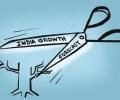
India's projected economic growth for 2022 has been downgraded by over two per cent to 4.6% by the United Nations, a decrease attributed to the ongoing war in Ukraine, with New Delhi expected to face restraints on energy access and prices, reflexes from trade sanctions, food inflation, tightening policies and financial instability, according to a UN report released on Thursday. The UN Conference on Trade and Development (UNCTAD) report downgraded its global economic growth projection for 2022 to 2.6 per cent from 3.6 per cent due to shocks from the Ukraine war and changes in macroeconomic policies that put developing countries particularly at risk. The report said while Russia will experience a deep recession this year, significant slowdowns in growth are expected in parts of Western Europe and Central, South and South-East Asia.

Workers moving out of agriculture to the rural labour force were largely getting absorbed in construction activities

The Year of India in Russia - as 2009 is officially known - has helped India Inc get into a long bear hug with the Russian consumer. They are lapping up everything - from Ratan Tata's marquee cars to Vijay Mallya's whisky.

Feeble demand in rural areas of the country has affected sales of fast-moving consumer goods (FMCG) in September as compared to August, which saw heavy stocking ahead of the festival season, according to the data of Bizom, a retail intelligence platform. Sales in rural India fell 14.3 per cent while urban sales growth stood at 1.1 per cent in September as compared to the previous month. Overall FMCG sales fell by 9.6 per cent in September as compared to August.

Extreme poverty in India declined by 38 million in 2021 to 167.49 million after a surge in the two preceding years, but remained above the 2018 level, the latest World Bank data shows. While for most countries poverty rose in 2020, when the Covid-19 pandemic hit the global economy, the data shows poverty shot up in India a year earlier in 2019 to 176.09 million from 151.79 million in 2018, the lowest pre-pandemic count. India's poverty rate at 11.9 per cent in 2021 also remained higher than the 2018 level of 11.09 per cent, though easing from 14.72 per cent in 2020.

Hindustan Unilever Ltd on Friday reported a 1.08 per cent increase in consolidated net profit at Rs 2,508 crore in the third quarter ended December 2023. The company had posted a consolidated net profit of Rs 2,481 crore in the same quarter last fiscal, Hindustan Unilever Ltd (HUL) said in a regulatory filing. Its revenue from sales of products was marginally down to Rs 15,259 crore during the quarter.

While many of the lost jobs will come back, the current loss is huge and its impact on the households that have suffered because of this cannot be captured in the comfort that jobs will come back eventually, observes Mahesh Vyas.

Less than half of rural households are engaged in agriculture.


Fitch Ratings on Monday cautioned that the Indian government has little fiscal headroom at its disposal to respond to possible shocks to growth given the country's lowest investment grade credit rating with a negative outlook. "India's public debt/GDP ratio, at about 87 per cent in FY21, is well above the median of around 60% for 'BBB' rated sovereigns. "We revised the Outlook on India's rating to Negative, from Stable, in June 2020, partly owing to our assumptions about the impact of the pandemic on public finance metrics. "The government has little fiscal headroom at its current rating level to respond to possible shocks to growth," it said in a report.

A new paper by blames 'jobs deficit' for the decline in female labour force.

The Central Board of Direct Taxes has said the government has not introduced any new provision regarding the chargeability of tax on jewellery.

Analysts and economists have hailed the fiscal projections in the interim Budget, saying the lower fiscal deficit forecast shows that the government, even in an election year, is serious about fiscal consolidation and that the numbers look achievable. According to Devendra Kumar Pant, the chief economist at India Ratings, the two broad themes of the interim Budget are fiscal consolidation and stepping up focus on agriculture/rural to course correct, to some extent, the differential benefits of the ongoing economic growth that's tilted in favour of upper-income bracket/urban households. The projected fiscal deficit numbers for FY24 and FY25 suggest that the government is serious about achieving the fiscal consolidation path of 4.5 per cent fiscal deficit by FY26, and given the nominal GDP growth assumption and revenue buoyancy, the target appears plausible, Pant said in a note.

The edtech major promised a learning revolution, offering hope to millions of under-educated youth. Now, those dreams are shattered, observes Devangshu Datta.

Pre-Budget excercise next month should scrupulously avoid adventurism of all types and refrain from making excessively ambitious projections on revenue and expenditure numbers for 2023-24, suggests A K Bhattacharya.

'Use this money to build an emergency fund if you do not have one.'

The AAP will contest all the 90 assembly seats in Haryana on its own, but the Lok Sabha polls will be fought as part of the INDIA bloc, Kejriwal said.

'Rather than taking a very short-term view on the markets, equity investing should be premised on longer term growth opportunities.'

Terming the Bill as a 'non political bipartisan issue,' he hoped to have all political parties on board as the Bill would benefit over 75 per cent of rural households and 50 per cent of urban households in the country.

'Due to rural stress, volumes continue to remain an issue for the industry, and we are yet to see any revival in demand.'
Do you think that the number of rich in India is rising? Or is it that this is true only of big cities? Do you still feel Indians are poor?

'Set aside around six months' monthly expenses for emergencies.' 'Keep this money in safe and liquid options, such as liquid funds and fixed deposits.'

Finance Minister Nirmala Sitharaman on Thursday announced a Rs 11.11 lakh crore spending on infrastructure and vowed to continue reforms as she resisted resorting to populist measures in Modi government's last Budget before general elections, instead choosing to stay on the path of cutting deficit while bolstering measures for focus groups.

One wonders what, given the recent past, the next quarter century holds in store for India, asks Aakar Patel.

Every patriot should learn from our history and recognise that celebrating size will neither negate nor obscure the huge economic challenges that India faces, asserts Rathin Roy.

'In India those who want change cannot bring about change, and those who can bring about change do not want change.'

'We need a candidate who will do our work and fight with the authorities; someone we can hold accountable.' 'Piyush Goyal is not that candidate.'

It would not be surprising if India, the world's largest producer of milk, has to resort to imports to meet the elevated summer demand, states Surinder Sud.

'As our per capita income increases and various demographic segments emerge, the need for various kinds of protection and risk covers will become even more explicit.'

Dwaipayan Bose on how index funds play a key role in the diversification of portfolios and help manage risks
A bench of Justices MR Shah and Hima Kohli directed the Centre to submit a fresh chart with the number of migrant and unorganised sector workers registered on eShram portal.

Modi said that for nearly one and a half years he has been putting in place details of new schemes to give new pace to the country's development and curb poverty.
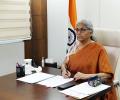
Finance Minister Nirmala Sitharaman on Saturday said the new tax regime will benefit the middle class as it will leave more money in their hands. Talking to reporters after the customary post-Budget address to the central board of the RBI, she said it is not necessary to induce individuals to invest through government schemes but give them an opportunity to make a personal decision regarding investments. "...the way we allowed for standard deduction and also the rates which have been fixed, tax rates which have been fixed for different slabs, it has actually left more money in the hands of the people, the taxpayer, the household," she said.

Robust procurement of paddy and wheat since 2017 and prompt payment to farmers have helped the UP government cultivate a positive and pro-farmer perception, defusing possible farm face-off situations.
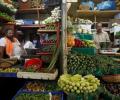
Farmers in Maharashtra, Gujarat, Karnataka, Tamil Nadu and Telangana anticipate a sharp decline in vegetable output this year, due to sustained declines in the water table after consecutive years of below-average rain. Prices of vegetables are expected to stay high for the next four to six weeks.

An improvement in political relations, anchored in a restoration of peace and tranquillity at the border, could open up opportunities for expanded economic and commercial relations between them, suggests former foreign secretary Ambassador Shyam Saran.

India's budget for the fiscal beginning April focuses on giving a boost to the ongoing economic recovery through a sharp increase in capex spending but is short on major growth-enhancing structural reform announcements, Fitch Ratings said Wednesday. The deficit targets present in the Union budget 2022-23 by Finance Minister Nirmala Sitharaman on Tuesday "are a bit higher than our forecasts when we affirmed India's 'BBB'/Negative sovereign rating in November," said Jeremy Zook, director and primary sovereign analyst for India, Fitch Ratings. While it was widely expected that the fiscal deficit will be lower than the targeted 6.8 per cent of the GDP in the current fiscal year ending March 31, 2022, Sitharaman put the number at 6.9 per cent.

This will cost the government Rs 3.1 trillion, about 10 per cent of its annual expenditure, and higher than any other spending item in its Budget.
 © 2026 Rediff.com - Advertise with us - Disclaimer - Privacy Policy - Sitemap - Feedback - About us - Terms of use - Grievances